
Vibe Coding for Enterprise and Mid-Size Companies: Build the Right Product for Less Capital
In February 2025, AI researcher Andrej Karpathy coined a phrase that spread across the tech world almost overnight: vibe coding. By the end of the year, Collins Dictionary had named it Word of the Year. The idea is simple: describe what you want in plain language, and an AI coding assistant writes the software.
Startups adopted it first. In Y Combinator's Winter 2025 batch, a quarter of companies reported codebases that were 95% or more AI-generated. For enterprise and mid-size organizations, the question is no longer whether vibe coding is real. It's how to use it without creating a security or maintenance problem you'll pay for later.
This guide covers what vibe coding is, where it creates real value for established businesses, where it goes wrong, and how Smart Solutions helps you put the right product in front of your users for a fraction of the traditional capital investment.
Vibe coding in one sentence: you bring the vibe, AI brings the code, and we bring the seatbelt.

What Is Vibe Coding?
Vibe coding is a way of building software where you describe the outcome you want, for example "a mobile form that captures site inspections, flags failed items, and emails the safety lead", and AI tools such as Claude Code, GitHub Copilot, Cursor or Replit generate working code. The builder steers by testing the result and refining the instructions, rather than writing every line by hand.
It sits between two approaches you probably already know:
Traditional custom development: full control, but slow and expensive.
Low-code platforms like Microsoft Power Apps: fast and well governed, but limited to what the platform supports.
Vibe coding brings low-code speed to fully custom software. That is what makes it powerful, and also why it needs experienced hands.
Why Enterprise and Mid-Size Companies Should Pay Attention
AI-assisted development is already mainstream. The 2025 Stack Overflow Developer Survey found that 84% of developers use or plan to use AI tools, and Gartner expects 90% of enterprise software engineers to use AI code assistants by 2028. Your competitors' IT teams are already experimenting. For established organizations, the benefits are practical:
1. Working prototypes in days, not months
Instead of a long requirements phase followed by a long build, you can put a working prototype in front of real users within days. Stakeholders react to something they can click through, not a 40-page specification.
2. Validate before you invest
Most IT projects that miss the mark don't fail because the code was bad. They fail because the product was wrong. Vibe coding makes it inexpensive to test an idea, learn from users, and adjust before you commit a large budget.
3. Clear the backlog of internal tools
Every mid-size company has a list of tools nobody has time to build: an intake form, an approval tracker, a reporting dashboard, a vendor portal. AI-assisted development makes these economical to deliver.
4. Modernize legacy processes faster
Spreadsheets, paper checklists and email-based approvals can become proper applications connected to Microsoft 365, Dataverse, SharePoint or your ERP, in far less time than a traditional rebuild.
5. Stretch your IT budget further
When build time drops, so does cost. The budget that used to fund one large project can fund several targeted ones, each tied to a measurable business outcome.
Bring Your Data Together, Then Put AI in Front of It
For most enterprise and mid-size organizations, the biggest opportunity isn't another new app. It's the data you already have, scattered across systems that don't talk to each other: customer records in the CRM, financials in the ERP, projects in SharePoint, operations in spreadsheets and history in legacy databases.
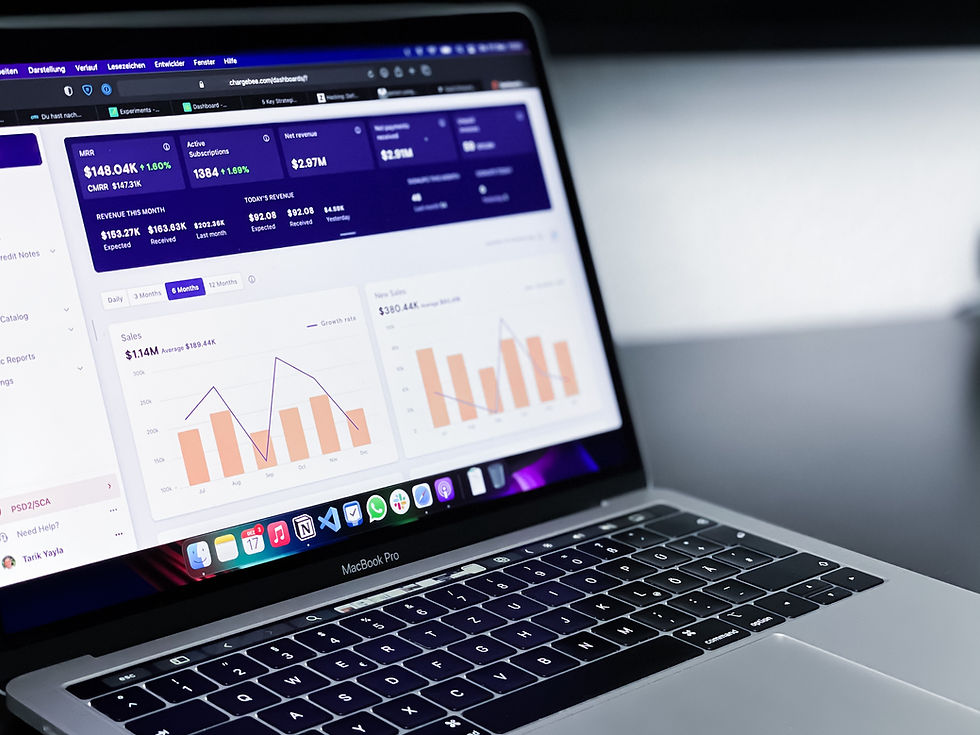
Vibe coding makes it much faster to build the connectors, pipelines and dashboards that bring all of that into one place, whether that's Microsoft Dataverse, Microsoft Fabric, Azure SQL or a platform you already own. Once your data is unified, you can put AI in front of it and unlock what your teams have been too busy to find:
Ask questions in plain English: "Which clients haven't ordered in 90 days?" or "Which sites have the most open safety issues?"
AI copilots and agents that summarize activity, flag risks and draft next steps for your team.
One source of truth for reporting, instead of five versions of the same spreadsheet.
Automated workflows that act on insights, not just display them.
This is often where the biggest return on investment is hiding: connecting the systems you already pay for and letting AI turn that combined data into decisions. It's exactly the kind of work we do every day with Microsoft 365, the Power Platform, Dataverse and Azure.
The Catch: Speed Without Discipline Creates Debt
Vibe coding's biggest strength, that anyone can generate code quickly, is also its biggest risk in a business setting. Veracode's 2025 GenAI Code Security Report tested more than 100 AI models and found that 45% of AI-generated code samples failed security tests against the OWASP Top 10. The most common problems we see in unmanaged AI-built apps:
Security gaps: hard-coded passwords and keys, weak authentication, unvalidated inputs.
Shadow IT: apps built outside IT's view that hold company or customer data with no governance.
Integration blind spots: prototypes that demo well but don't connect to identity (Microsoft Entra ID), your data sources or existing workflows.
Maintenance debt: code nobody on your team understands, which becomes expensive to change.
Compliance exposure: privacy obligations such as PIPEDA, data residency and audit requirements overlooked in the rush to ship.
In short, vibe coding gets you to a demo quickly. Getting to a product your organization can trust takes engineering judgment.
How Smart Solutions Helps: The Right Product for Less Capital
Every engineer at Smart Solutions brings more than 15 years of industry experience, and we have delivered 50+ projects across Microsoft 365, the Power Platform and custom business applications. We use AI-assisted development to move fast, and our experience to make sure what we build is secure, integrated and maintainable.
Step 1: Discover and define the right product
We start with the business problem, not the technology. In a focused discovery session, we identify your users, the outcomes that matter and the simplest solution that delivers them. Sometimes that is a custom app built with AI; sometimes it is Power Apps, or better use of the Microsoft 365 licences you already pay for.
Step 2: Rapid prototype with AI
Using AI-assisted development, we build a working prototype quickly so your team can test it against real workflows. You see progress in days, not quarters.
Step 3: Harden for production
Before anything goes live, we apply engineering discipline: code review, security testing, proper authentication, role-based access, logging, and integration with your existing systems and data.
Step 4: Deploy, document and hand over
We deploy into your environment, including Canadian data residency on Azure where you need it, document everything, and work alongside your IT team for a smooth handover. You own the solution. No black box.
Why this lowers your capital investment
Learn early, not late: validate with a prototype before funding a full build.
Smaller, phased budgets: fund each stage based on proven results.
Build on what you own: we extend your Microsoft 365, Azure and Power Platform investments instead of adding new platforms.
Lower long-term costs: secure, well-documented code is cheaper to maintain and extend.
Senior team, lean footprint: a small, experienced team using AI tools delivers what used to require a much larger one.
Where Vibe Coding Fits Best
Strong candidates for an AI-accelerated build:
Internal tools, dashboards and reporting
Client intake, CRM extensions and customer portals
Inspection, audit and incident management apps
Workflow and approval automation
Data hubs that bring multiple systems into one place, with AI on top
AI agents and copilots connected to your business data
Proofs of concept for new digital products
Core systems of record, payment processing and regulated clinical systems still benefit from AI-assisted development, but they call for heavier review, testing and change control.
The Fun Part: A Quick Vibe Check
Is your organization ready for vibe coding? Give yourself one point for every statement that sounds familiar:
A critical process lives in a spreadsheet called FINAL_v7_REALLY_FINAL.xlsx.
"Can IT build us a quick app?" has been on the backlog since before the last office holiday party.
Someone prints a form, fills it in by hand, scans it, and emails it to the person sitting next to them.
Your approval workflow is officially "reply-all and hope."
Someone has said "it's just a simple app" out loud, in a meeting, with confidence.
Add up your points (not scientific, but surprisingly accurate):
0 to 1: Impressive. Please share your secrets.
2 to 3: You have quick wins waiting. Let's find them.
4 to 5: Put the kettle on. We should talk this week.
A Few Fun Facts
It started with a post. Andrej Karpathy described vibe coding in a February 2025 post on X as giving in to the vibes and forgetting the code even exists. Within months, it was on conference agendas and in board meetings.
Word of the Year. Collins Dictionary named "vibe coding" its 2025 Word of the Year.
A 70-year-old dream. In the 1950s, computing pioneer Grace Hopper pushed for programming in English-like words. Her FLOW-MATIC language paved the way for COBOL. Vibe coding finally lets us build software in plain English.
The original bug. In 1947, engineers working on the Harvard Mark II found an actual moth stuck in a relay and taped it into their logbook as the "first actual case of bug being found." AI can help fix bugs today, but it still can't catch moths.
Frequently Asked Questions
Is vibe coding safe for enterprise use?
It can be, when AI-generated code goes through the same security review, testing and governance as any other software. The risk comes from shipping unreviewed code, not from the AI tools themselves.
How is vibe coding different from low-code?
Low-code platforms give you visual building blocks inside a governed platform. Vibe coding produces actual source code, so there are fewer limits on what you can build, but more responsibility for quality and security. Many of our projects combine both.
Does vibe coding replace developers?
No. It changes where developers spend their time: less on boilerplate, more on architecture, security, integration and understanding the business problem.
Let's Build the Right Product Together
Vibe coding isn't a replacement for software engineering. It's an accelerator for teams that know how to use it. The organizations that come out ahead will pair AI speed with experienced oversight, and spend their capital on products their users actually adopt.
Have an idea, a backlog of internal tools, or a legacy process that is overdue for modernization? Contact Smart Solutions at info@smartsolutionsco.ca or call (647) 800-1788. Explore our solutions and case studies to see what we've delivered for organizations like yours.


Comments